The CFO Guide to Dye Sublimation Investment: Calculating TCO and ROI of Dual Spray Printing Systems
Why Printing Equipment Investment Is a Financial Decision, Not Only a Technical Decision
When a textile factory invests in a new printing system, the purchasing decision is often led by technical departments.
However, from a financial perspective, the real question is different:
How much value can this equipment create throughout its operational life?
A lower purchase price does not always represent a lower investment cost.
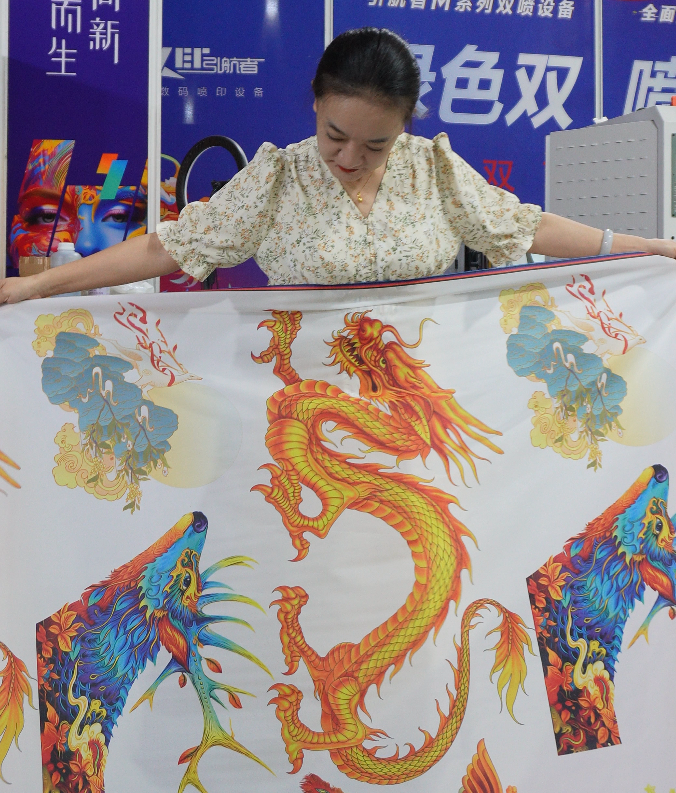
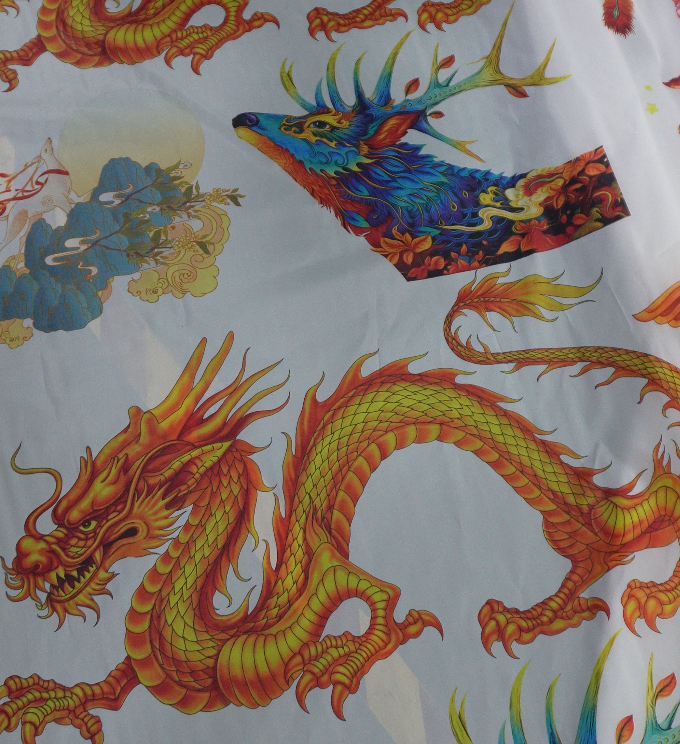
For industrial textile manufacturers producing cultural patterns such as dragons, phoenixes and five-color sacred deer, the biggest financial risks often come from:
- production instability;
- rejected products;
- labor inefficiency;
- unexpected downtime;
- limited application capability.
Therefore, CFOs and business owners increasingly evaluate equipment through:
Total Cost of Ownership (TCO)
rather than only the initial purchase price.
The Hidden Costs Behind Low-Priced Printing Equipment
Many factories focus on the machine quotation but underestimate long-term operational expenses.
A printing system creates costs in several areas.
1. Material Waste Caused by Low Yield Rate
When producing premium textile graphics, every defective meter represents:
- wasted fabric;
- wasted ink;
- wasted labor;
- delayed delivery.
For complex designs like traditional cultural patterns, inconsistent color or unclear details can make finished products unacceptable.
A higher Yield Rate directly improves profitability.
2. Labor Cost From Unstable Production
A factory does not only pay for machine operation.
It also pays for:
- operator time;
- troubleshooting;
- repeated adjustments;
- production monitoring.
Equipment requiring frequent intervention increases hidden labor expenses.
3. Downtime Cost
The most underestimated expense is production interruption.
When a machine stops unexpectedly:
- orders may be delayed;
- workers become idle;
- customer confidence decreases.
Therefore, professional buyers focus on:
Downtime reduction
as an important financial indicator.
Understanding Total Cost of Ownership (TCO) in Sublimation Printing
A complete TCO calculation should include:
Initial Investment
Including:
- printer purchase cost;
- installation;
- training;
- accessories.
Operating Cost
Including:
- sublimation ink consumption;
- maintenance;
- replacement parts;
- labor.
Production Loss
Including:
- defective products;
- machine downtime;
- delayed orders.
Revenue Creation Capability
Including:
- production capacity;
- new application opportunities;
- premium product pricing.
A machine with a higher initial investment may generate better financial results if it provides:
- higher stability;
- better productivity;
- wider application range.
Dual Spray vs Single Spray: Finding the Financial Turning Point
Many companies ask:
“Should we choose a single spray system or invest in a dual spray solution?”
The answer depends on production goals.
Single Spray System
Advantages:
- lower initial investment;
- suitable for smaller production volumes;
- appropriate for basic applications.
Limitations:
- lower production flexibility;
- less suitable for demanding double-sided applications;
- limited expansion capability.
Dye Sublimation Dual Spray Printer
Advantages:
- higher production capability;
- stronger application flexibility;
- better suited for premium textile markets.
Especially for products requiring:
- front and back visual effects;
- exhibition textiles;
- decorative fabrics;
- high-value cultural designs;
a dual spray system can create additional revenue opportunities.
ROI Analysis: When Does a Higher-End System Create More Value?
A professional cost effective sublimation printer should not simply mean the lowest purchase price.
A financially effective machine should improve:
- output efficiency;
- product quality;
- customer acceptance;
- production reliability.
The Return on Investment (ROI) depends on:
Increased Production Capacity
More stable output allows factories to accept more orders.
Higher Product Value
Premium printing quality enables companies to enter higher-margin markets.
Examples:
- luxury exhibition graphics;
- customized cultural products;
- high-end textile decoration.
Reduced Operational Risk
Stable equipment reduces unexpected expenses caused by:
- production failure;
- emergency repairs;
- missed delivery schedules.
Procurement Decision Matrix From a CFO Perspective
Before approving a printing equipment investment, decision makers should evaluate:
| Evaluation Factor | Low-Cost Equipment | Industrial Dual Spray System |
|---|---|---|
| Initial Purchase Price | Lower | Higher |
| Production Stability | Variable | Designed for continuous operation |
| Long-Term Maintenance Cost | Potentially higher | More predictable |
| Application Range | Limited | Wider |
| Premium Product Capability | Limited | Strong |
| ROI Potential | Depends on volume | Higher for growing factories |
The correct decision depends on business strategy, not only equipment price.
Why Cultural Textile Production Requires Strategic Investment
Traditional cultural designs are becoming commercial assets.
Products featuring:
- dragons;
- phoenixes;
- symbolic animals;
- traditional patterns;
are increasingly used in:
- tourism products;
- exhibitions;
- international cultural events;
- premium decoration projects.
These markets require:
- accurate color reproduction;
- stable production;
- flexible customization.
A professional sublimation printer allows manufacturers to transform cultural creativity into scalable commercial products.
The Role of Complete Printing Ecosystem
A printer alone does not create production success.
A complete textile sublimation printing solution includes:
- suitable printer architecture;
- matched sublimation ink;
- correct textile materials;
- color management;
- technical support.
For example, an Epson I3200 sublimation printer system requires proper ink compatibility and operational management to achieve stable industrial performance.
Long-Term Investment Perspective
From a CFO perspective, industrial equipment should answer three questions:
Can it reduce production risk?
Stable equipment protects customer relationships.
Can it increase production opportunities?
Better capability creates access to new markets.
Can it generate measurable financial returns?
The investment must translate into:
- higher revenue;
- lower operating costs;
- stronger competitiveness.
Technical FAQ
1. Why should CFOs evaluate TCO instead of only purchase price?
Because the real cost of equipment includes operation, maintenance, downtime and production loss over its lifetime.
2. Is a dual spray sublimation system always better than a single spray system?
Not always. The correct choice depends on production volume, product type and future business growth plans.
3. How does Yield Rate affect factory profitability?
Higher Yield Rate reduces waste and improves the percentage of sellable products produced from the same resources.
4. Why is Downtime reduction important financially?
Because unexpected machine stops create hidden costs through lost production capacity and delayed deliveries.
5. How should companies measure Return on Investment (ROI) after purchasing equipment?
They should compare:
- production increase;
- cost reduction;
- new business opportunities;
- equipment operating lifespan.
Final Summary
Industrial printing equipment should be evaluated as a business asset, not a simple purchase.
The lowest quotation does not always create the highest profit.
For textile manufacturers entering premium cultural printing markets, a professional dye sublimation dual spray printer provides financial value through:
- improved Yield Rate;
- reduced downtime;
- expanded applications;
- stronger long-term ROI.
The best investment is not the cheapest machine.
It is the production system that continues creating value years after installation.