
How Dual Head Synchronization Transforms Textile and Flag Production Workflows
Commercial Scenario Introduction
In modern textile manufacturing, production speed alone is no longer enough. Brands now require:
- Consistent batch quality
- High output stability
- Reduced production downtime
This is where textile sublimation printing solution technology becomes essential.
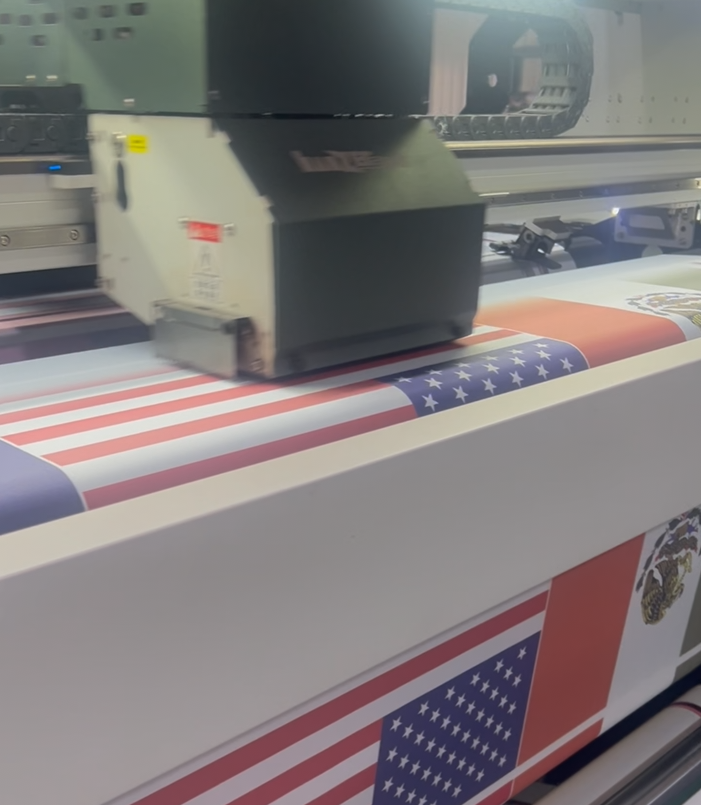
Material Adaptation & Workflow Integration
Different fabrics such as:
- Flag polyester
- Mesh fabric sublimation printing materials
- Lightweight textile rolls
require precise ink control and synchronized output.
Dual head systems ensure consistent coverage across varied materials.
Industrial Equipment Matching Requirements
To achieve stable production:
- Precise tension control system
- Stable ink delivery architecture
- Continuous feeding mechanism
must work together with dual head synchronization.
Real Production Workflow Example
A typical industrial workflow includes:
- File processing and color management
- Synchronized dual-head printing execution
- Continuous fabric feeding
- Batch output inspection
This workflow significantly reduces manual intervention.
Maintenance Recommendations
- Regular nozzle health checks
- Ink system calibration
- Environmental humidity control
These ensure long-term system reliability.
FAQ
Q1: Can it handle mesh fabrics?
Yes, it is optimized for porous materials.
Q2: Does it reduce production errors?
Yes, synchronization reduces misalignment.
Q3: Is it suitable for large factories?
Absolutely, it is designed for industrial scale.
Q4: How does it affect workflow speed?
It improves overall workflow efficiency.
Q5: What is the biggest advantage?
Stable batch production consistency.
Conclusion
Dual head synchronization transforms textile printing from manual workflow into a structured industrial production system.