
How to Buy a Dye Sublimation Dual Spray Printer: Insights from a Nigeria Customer Factory Visit
Investing in industrial printing equipment requires careful analysis of performance, operating costs, and long-term reliability. During a recent factory visit, a customer from Nigeria conducted a comprehensive evaluation before deciding whether to buy dye sublimation dual spray printer equipment for his production facility.

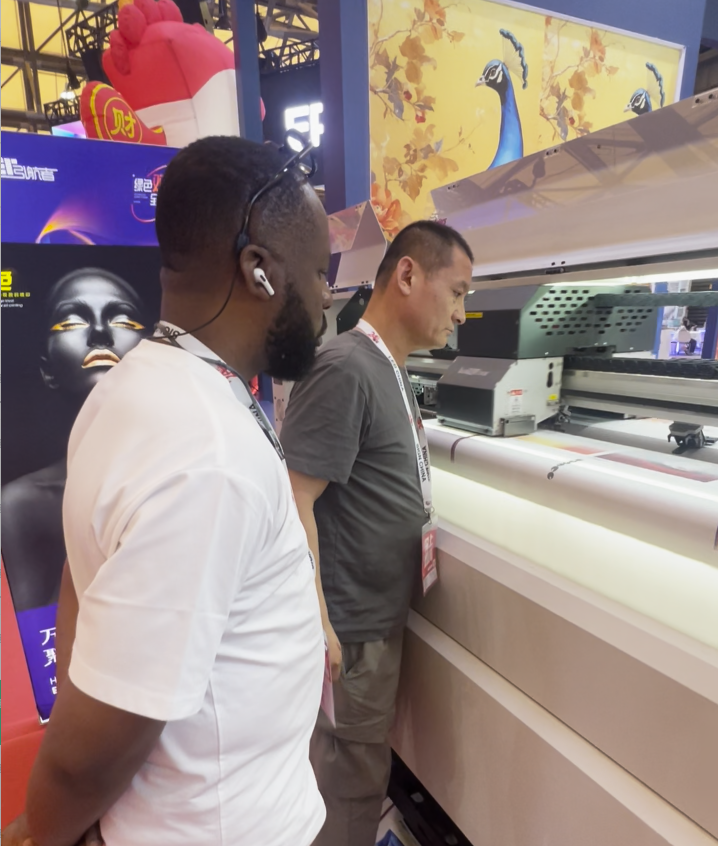
This visit highlighted several important criteria that every international buyer should consider before making a purchasing decision.
The first factor is machine stability. While many suppliers focus on maximum speed specifications, real-world productivity depends on consistent performance over extended production periods. During the demonstration, continuous printing tests were conducted to verify reliable operation, accurate media transport, and stable ink delivery.
Printhead selection is another critical consideration. Epson I3200 printheads have become a popular choice within the industry due to their balance of speed, precision, and durability. When evaluating a printer, buyers should verify genuine printhead configurations and understand how the system manages maintenance and cleaning procedures.
Production efficiency directly impacts profitability. A cost-effective dual spray sublimation printer should provide higher throughput than comparable single-head systems while maintaining image quality. Increased production speed enables businesses to process larger order volumes without significantly increasing labor costs.
Print width is equally important. Buyers should select machine widths according to their target markets. Companies specializing in flags, banners, and exhibition graphics may require wider formats, while textile manufacturers should evaluate media compatibility based on their production requirements.
Another key area often overlooked is consumable cost analysis. Ink consumption, transfer paper usage, and maintenance materials all contribute to long-term operating expenses. A lower purchase price does not always translate into lower ownership costs. Buyers should compare total production economics rather than focusing exclusively on machine price.
Maintenance requirements can also affect profitability. Industrial equipment should provide convenient access to service components, automated maintenance functions, and reliable technical documentation. Reduced downtime contributes significantly to overall production efficiency.
International buyers should pay close attention to after-sales support capabilities. Reliable technical assistance, remote troubleshooting, operator training, and spare parts availability are essential for long-term success. Strong support infrastructure often becomes a decisive factor when comparing suppliers.
Another important recommendation from this dye sublimation printer purchase guide is to avoid relying solely on advertised specifications. Some manufacturers promote theoretical speeds achieved under ideal conditions that may not reflect actual production environments. Whenever possible, customers should request live demonstrations and test printing using their own files.
Color quality evaluation is equally important. A professional dye sublimation dual spray printer should produce accurate gradients, vibrant colors, and consistent reproduction across multiple production runs. Real sample testing remains one of the most reliable methods of verification.
The Nigerian customer’s factory visit ultimately demonstrated the value of hands-on evaluation before purchasing equipment. By examining production efficiency, color accuracy, maintenance requirements, and support capabilities, buyers can make more informed decisions and avoid costly mistakes.
For businesses seeking sustainable growth in textile printing, flag manufacturing, exhibition graphics, and advertising production, choosing the right dye sublimation dual spray printer is a strategic investment. Careful evaluation of total ownership cost, production performance, and supplier reliability will help ensure long-term profitability and operational success.